If you grew up in a traditional school system, you likely learned a very specific rule early on: mistakes are bad. Whether it was a failing grade on a math test or a trip to the principal’s office for acting out, a mistake was treated as a flaw — a problem that needed immediate, punitive correction.
This ingrained fear of failure often follows us into adulthood, making it incredibly stressful for parents to watch their own children struggle academically or behaviorally. But at Inspire Academies, the educational philosophy demands a radical shift in how we view these challenging moments.
“People usually think of mistakes, either academically or behaviorally, as if there’s a deficiency or a problem,” explains Justin Johnston, Superintendent of Inspire Academies. “Instead of just realizing that mistakes are the natural process of learning.”
At Inspire Academies, the goal isn’t to eliminate mistakes. The goal is to use them.
From Disciplinarian to Coach
In a traditional setting, a behavioral mistake is often met with an automatic punishment — a point deduction, a lost privilege, or detention. While accountability is crucial, a purely punitive system often treats the symptom without ever addressing the root cause.
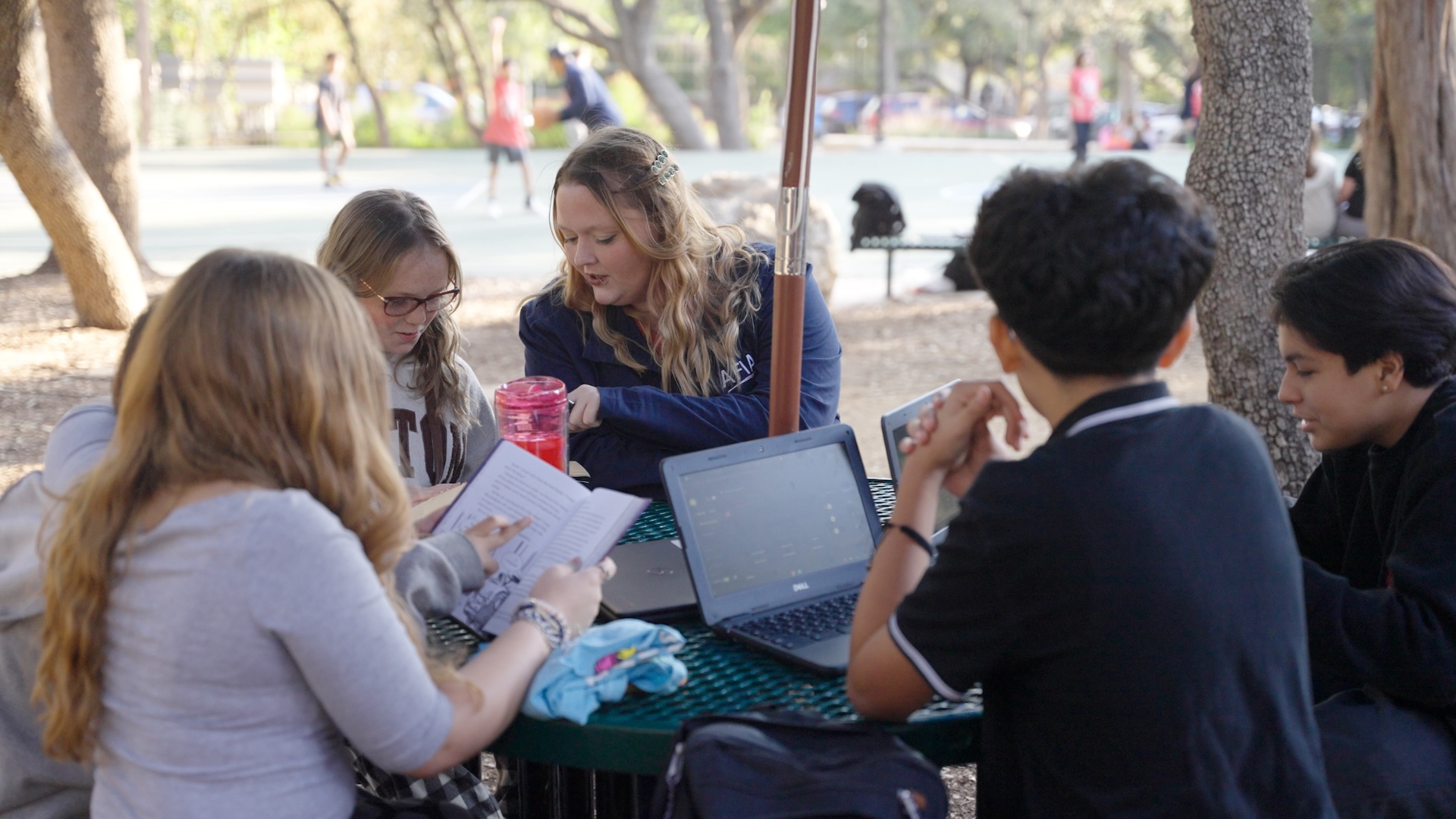
Inspire Academies takes a different approach, relying on a “coaching mindset.” Teachers and staff act as guides, helping students navigate their missteps to build long-term resilience and self-awareness.
“No matter where we are in our journey, we have opportunities for people to coach us,” Johnston says. He points out that if educators only intervene when a situation escalates to a crisis, they are doing the student a disservice. “If we simply wait for the mistake to be heavy enough to require immediate attention, we’re missing hundreds and thousands of different opportunities to continue to help kids.”
So, what does this coaching actually look like in practice? It looks less like a lecture and more like a conversation. It involves asking questions rather than issuing immediate directives, empowering the student to understand their own actions and figure out how to make a better choice next time.
Behavior is Communication
To truly coach a student through a difficult moment, educators and parents must first change how they view the behavior itself.
When a student acts out, shuts down, or disrupts a class, it is easy to label them as a “problem.” But the coaching mindset requires us to look deeper. According to Johnston, the outward action is rarely the whole story.
“Behavior is just an output,” Johnston notes. It is a symptom that “something internally is causing them to react this way.”
When a staff member at Inspire approaches a struggling student, their primary goal is to figure out the why behind the output. Are they overwhelmed? Do they lack the academic foundation to complete the task? Are they navigating a personal issue outside of school? By identifying the root cause, educators can provide the specific support the student needs to regulate themselves and get back on track.
The Parent Partnership: Assuming Positive Intent
For parents, watching a child navigate these developmental bumps can trigger a fiercely protective instinct. When the school calls to discuss a behavioral or academic struggle, it’s easy for parents to feel defensive, assuming their parenting is being judged or that the school is unfairly labeling their child.
Johnston emphasizes that the relationship between the school and the family must be a true partnership, built on a foundation of mutual trust.
“The true answer is positive intent and believing the best in each other,” Johnston urges. “If we believe the best in each other and communicate with each other, we can work through anything.”
The school is making decisions using the best information it has to support your child’s development. When families approach these challenging conversations with open communication and positive intent, the student feels supported on all sides.
A Community of Grace
Perhaps the most difficult — and most beautiful — aspect of this philosophy is that it requires a community-wide commitment. It is one thing to want grace and patience for your own child when they make a mistake; it is another to extend that same grace to other children.
“You may want this for your kid, but you have to want this for every kid,” Johnston explains. “While your kid may be on a journey, another kid may be on a journey at a different spot. What’s hard is… my kid can manage themselves, but Johnny over here is having a hard time managing himself. What we need is an understanding that we’re working with each person equally, wherever they are inside of that journey.”
This doesn’t mean the school compromises on a safe learning environment. “Safety is the number one goal for us, because if we’re not safe, we can’t learn,” Johnston assures. Within that safe environment, the school remains fiercely dedicated to the individual development of every student, regardless of how messy their current chapter might be.
“We’re going to make sure that all kids have the opportunity to develop, and that we don’t pick and choose which families those are, or which situations that we support,” Johnston says. “We want to support all situations inside of this development process.”
At Inspire Academies, a mistake is not the end of the story. It is simply the beginning of the next lesson.
Philip Castillo is executive director of communications for BRAINATION.